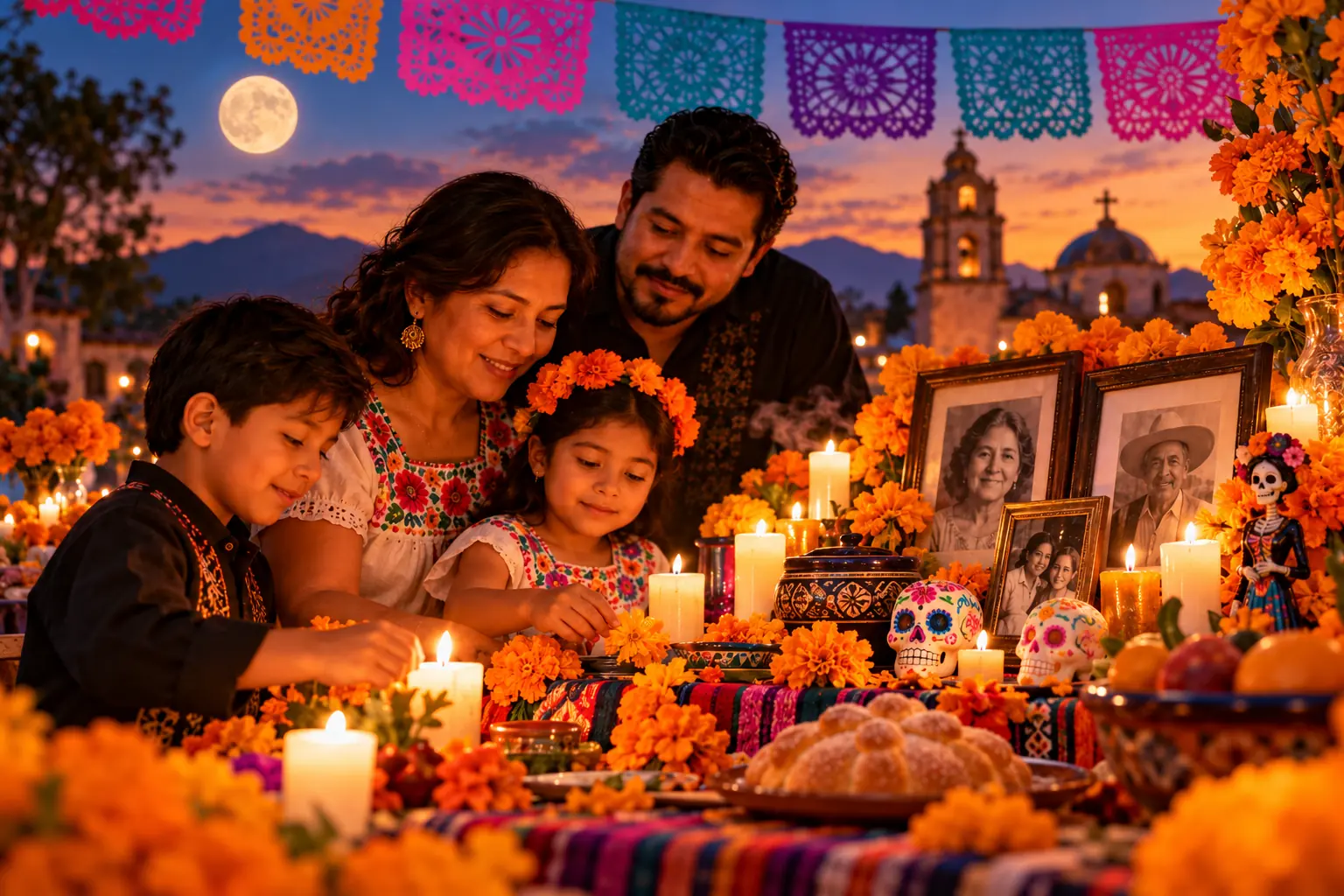
The scent of a familiar meal, a favorite song, or a photograph can bring us closer to someone we miss. For many Latino families, remembering loved ones who have died is woven into everyday life through storytelling, prayer, food, and traditions passed from one generation to the next. Día de los Muertos offers a special opportunity to honor these connections.
Día de los Muertos, or Day of the Dead, is a beautiful reflection of how culture, traditions, and Indigenous roots endure through generations. Its history predates the 1517 Spanish conquistadors arrival to the land. The Aztec empire had a spiritual holiday to celebrate their Lady of the Dead Mictēcacihuātl, Queen of Mictlān (the underworld). The Lady of the Dead was their protector in life and in death. More specifically, she would watch over the bones of past lives, as their purpose was to be used to create new life. So once a year, the Queen of Mictlān would ascend to the land of the living, as the Aztecs welcomed her with song, food, and dance.” During Spanish colonization, Indigenous communities preserved and adapted their traditions amid the imposition of Catholic beliefs. Over centuries, Indigenous practices and Catholic observances became intertwined, helping shape the celebration we recognize today.
Día de los Muertos is typically celebrated on November 1 and 2. While most closely associated with Mexico, related observances honoring the dead take place throughout Latin America, each with distinct customs and meanings. In many Mexican communities, November 1 honors children who have died, while November 2 honors adults. Practices vary across regions, families, and spiritual beliefs; there is no single way that all Latino families observe these days.
One of the most meaningful traditions is creating an ofrenda, an altar dedicated to loved ones. Families may arrange photographs, candles, sugar skulls, cempasúchil flowers, favorite foods, and personal belongings. Within many families’ spiritual traditions, these offerings welcome the spirits of loved ones home. Families may also visit gravesites, share meals, and tell stories that celebrate the lives of those who have died.
These rituals offer a meaningful way to understand grief: our relationship with someone can change after death while remaining an important part of our lives. This idea is often called continuing bonds. Preparing a grandmother’s recipe, remembering a parent’s advice, or sharing a loved one’s stories can help us carry their memory into everyday life. For some people, these connections offer comfort as they adjust to loss.
Remembering can bring many emotions. We may laugh at a familiar saying and cry because we long to hear that person’s voice again. Día de los Muertos makes room for both sorrow and celebration, without requiring anyone to feel a particular way. Taking time to hold our grief, to acknowledge the loss, feel what arises, and remember with others can be part of healing. For generations, our cultural traditions have offered space for this through gathering, prayer, music, food, and storytelling, reminding us that we do not have to carry our sorrow alone.
Connecting with our cultural roots can nurture a sense of identity, belonging, and connection to the wisdom of those who came before us. For members of our immigrant community, Día de los Muertos can serve as a bridge to our homelands, ancestors, languages, and family traditions across borders. When returning home or visiting a loved one’s resting place is not possible, creating an ofrenda, preparing a cherished recipe, or sharing memories with relatives over a phone call can help us feel connected.
Inviting children to draw a picture, choose a photograph, or listen to family stories helps carry these connections into the next generation. A gentle question, “What would you like us to remember about them?”, allows children to participate at their own pace. Speaking a loved one’s name, sharing a saying in our home language, or explaining an offering can help children learn about their family’s history while nurturing cultural pride.
Through these traditions, we carry forward ways of caring for one another that have sustained our families for generations. Healing can include holding both the pain of absence and the love that remains, with the comfort of knowing that our roots remain part of us wherever we make our home.
This Día de los Muertos, we invite you to reflect: Whose memory would you like to honor, and what part of their love do you carry forward?
Through our stories, traditions, and care for one another, we continue making space for those we love.
What Participants Shared
This article was written by El Centro de Amistad’s (ECDA) Mission GRYD Prevention Team. Our program supports youth and families through family-centered case management, parent education, youth development activities, and connections to community resources. Through opportunities for connection, skill building, and family engagement, we help strengthen relationships, nurture resilience, and support youth in building a positive future.
- Claudia Caldera, GRYD Case Manager
- Ever Blanco-Cruz, GRYD Case Manager
- Cinthya Marin, GRYD Case Manager
- Carolina Ramos, MA, LMFT, GRYD Program Manager
- Maria Williams, MA, LMFT, Program Director – IECMH & GRYD
For more information on our GRYD services, please email us at missiongryd@ecda.org or call our offices to enroll at 818-441-7127.